
August 30, 2018
Disaster Casualty Losses
Share this article...


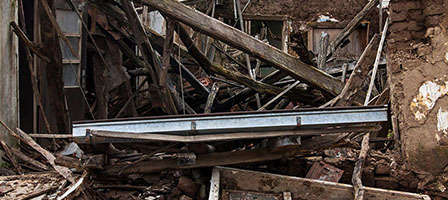
A disaster loss is actually a casualty loss that occurs in a geographic area that the President of the United States declares eligible for Federal disaster assistance. Disaster losses are also eligible for special tax benefits, which are discussed in this brochure.
Note: Tax reform no longer allows a federal deduction for personal casualty losses other than in disaster areas. Some states continue to allow non-disaster area casualty loss deductions.
What is a Casualty Loss?
A casualty loss occurs when there is property damage from a sudden, unanticipated event. Some examples of qualifying events are: hurricanes, earthquakes, tornadoes, floods, storms, fire and volcanic eruptions.
Why Are Disaster Losses Different?
Taxpayers within a federally declared disaster area may elect to claim their loss:
The return on which to claim a disaster loss deduction depends upon a number of factors and should be carefully analyzed to determine which year is the most beneficial for the taxpayer.
Generally, for each item lost in the casualty the deductible loss is the lesser of:
For real property, the loss is figured on the whole property (buildings, plants, trees, etc.), not item-by-item.
(1) Generally, the measure of a taxpayer’s basis in a property is its cost. When property is inherited, received as a gift, or acquired in a nontaxable exchange, the basis will be determined in some other manner. Certain events can take place after acquiring the property that can increase or decrease the basis; thus the term “adjusted basis”. Examples would be improvements to the property, depreciation and casualty loss deductions.
(2) Fair market value (FMV) is the price that a willing seller would accept from a willing buyer when the seller does not need to sell nor must the buyer purchase and both are aware of all the relevant facts.
Business or Personal Casualty
Those that are business casualty losses are fully deductible without limitations. Personal casualty losses, on the other hand, are first reduced:
Example: Claiming a Personal Loss – The taxpayer’s principal residence was damaged in a flood in a federally declared disaster area. The damage amounted to $12,000 and the taxpayer had no flood insurance. His AGI for the year was $57,000. His casualty loss for the year is determined as follows:
Since the loss occurred in a federally declared disaster, the taxpayer can elect to take the casualty in the prior tax year.
Figuuring a Loss
To determine the deduction for a casualty or theft loss, figure out the loss first.
Amount of loss: Figure the amount of the loss using the following steps.
It is possible to incur a gain from a casualty event. If a taxpayer’s reimbursement is more than the adjusted basis in the property, there is a gain. This is true even if the decrease in the FMV of the property is smaller than the adjusted basis. If there is a gain, taxes may have to be paid on it, or reporting the gain may be postponed (as discussed later). If the gain is from a taxpayer’s primary residence and the taxpayer has owned and used the residence as the main home for 2 out of the prior 5 years, the taxpayer can exclude $250,000 ($500,000 on a joint return) of gain.
Example: Assume an individual purchased his home for $50,000 fifteen years ago and the home is destroyed by a hurricane. The insurance company decides the home is a total loss and pays the single homeowner $200,000 as the settlement for the loss. He decides not to rebuild and sells the lot where the house once stood for $40,000. If the taxpayer elects to use his $250,000 home gain exclusion to offset the gain from the casualty, he would have no taxable gain.
If the taxpayer in this example decides to rebuild or replace his home, he could postpone the gain as outlined below.
Replacement Period for Postponed Gains
If a taxpayer receives insurance proceeds or other reimbursement that is more than the adjusted basis in the destroyed or stolen property, there is a gain from the casualty. This gain must be included in income in the year the reimbursement is received, unless the taxpayer buys replacement property and chooses to postpone reporting the gain. To postpone the entire gain, the cost of the replacement property must be at least as much as the reimbursement received. Generally, a casualty loss that is not reimbursable is deductible only on the return of the year that the casualty occurred, but for losses in federally declared disasters, taxpayers can choose to claim the loss either on the return for the year of the loss or on the prior year’s return.
Home Destroyed is Still Treated as a Home
A taxpayer may be able to continue treating their home as a qualified home even after it is destroyed in a casualty. This means the taxpayer can continue to deduct the mortgage interest subject to the normal limits. However, the taxpayer must do one of the following within a reasonable period of time after the home is destroyed:
1. Rebuild the destroyed home and move into it, or
2. Sell the land on which the home was located.
This rule applies whether the home is the main home or a second home that the taxpayer treats as a qualified home.
Reimbursement for Living Expenses
An exclusion from income is allowed for insurance proceeds received for a temporary increase in living expenses due to a casualty loss of a principal home. The exclusion amount is limited to the increased “actual” reasonable and necessary living expenses as compared to the “normal” living expenses that would be incurred by the taxpayer. Living expenses include temporary housing, utilities, meals, transportation and miscellaneous items like laundry, etc. For this purpose, mortgage interest is not considered a living expense.
Example – Reimbursement of Living Expenses - When a fire damaged their home, the taxpayers moved to a motel for a short time and then moved to a rented house. They stayed at the rental for about one month while they were having their home repaired. They incurred the following expenses during this period, compared to their normal household expenditures:

The taxpayers were reimbursed for the actual living expenses ($2,990) from the insurance company. Of that amount, $1,975 (the increase in living expenses) is excludable from their income.
Proving Casualty Losses
Taxpayers will need to show evidence of the cost of the lost property and evidence of the amount of the loss. It is helpful to have photos of the property before and after, notes describing the property that was damaged, appraisals and news clips describing the event. Blue Book values can be helpful in casualties that involve cars.
A qualified appraiser should be used to determine the FMV of real property and scheduled personal property.
Insurance Proceeds in a Disaster Area
A taxpayer whose principal residence (or its contents) is damaged in a disaster can qualify for special tax treatment regarding certain insurance proceeds received as a result of the casualty. To qualify, the locale of the residence must be in a Presidential-declared disaster area. The rules stipulate that no gain is recognized on the receipt of insurance proceeds for personal property that was part of the residence contents, if such property was not scheduled under the insurance policy (property such as jewelry which is covered by a rider under the insurance policy).
Other insurance proceeds received for the residence or its contents may be treated as a common pool of funds. If those funds are used to purchase property similar to the property lost, a taxpayer will need to recognize the gain only to the extent that the pool is more than the cost of the replacement property. The replacement period for the damaged or lost property in a disaster area is four years after the close of the first taxable year in which any part of the gain on the involuntary conversion is realized.
These rules are extended to renters as well. Renters who receive insurance proceeds related to disaster damage to their property in a rented principal residence also qualify for the disaster loss relief.
Other “reimbursement”: Although insurance is the most common form of reimbursement for casualties, other types of “reimbursement” also can reduce the amount of loss. These include:
Filing Extensons & Penalty Waivers
The IRS will extend the due date for filing and paying taxes and waive related penalties (late filing and payment) for a taxpayer in a Presidential-declared disaster zone. The IRS must also abate assessment of underpayment interest for the period of the extension. Generally, the IRS will issue a news release shortly after the disaster designation has been issued outlining the extension and waiver periods.
The advice included in this article is not intended or written by this practitioner to be used, and it cannot be used by a practitioner or taxpayer, for the purpose of avoiding penalties that may be imposed on the practitioner or taxpayer.
Note: Tax reform no longer allows a federal deduction for personal casualty losses other than in disaster areas. Some states continue to allow non-disaster area casualty loss deductions.
What is a Casualty Loss?
A casualty loss occurs when there is property damage from a sudden, unanticipated event. Some examples of qualifying events are: hurricanes, earthquakes, tornadoes, floods, storms, fire and volcanic eruptions.
Why Are Disaster Losses Different?
Taxpayers within a federally declared disaster area may elect to claim their loss:
- In the year it occurs, or
- On the preceding year’s return.
The return on which to claim a disaster loss deduction depends upon a number of factors and should be carefully analyzed to determine which year is the most beneficial for the taxpayer.
- The tax brackets for each year – Each year should be carefully examined as to which will provide the greatest overall tax advantage without wasting other tax benefits.
- The need for immediate cash – The primary purpose of the special rules allowing the casualty loss to be claimed on the prior year’s return is to provide a taxpayer access to a tax refund without the need to wait – often many months - to file their return for the year of the loss.
- Self-employment tax – Self-employed taxpayers will also need to consider whether to take a business casualty loss that affects inventory in the current or prior year since the loss can offset self-employment tax as well as income taxes.
- Whether the loss will be used up – If the casualty loss is not fully used up in the year it is first deducted, it can create what is called a net operating loss (NOL). For losses claimed on a 2018 or later year return, the NOL is carried forward as a deduction on the next and future years until used up. If the loss is claimed on the 2017 or an earlier year return, the NOL is first taken back to the second prior year return; any excess carries forward. NOLs occurring in 2018 and subsequent years can only offset 80% of a subsequent year’s taxable income.
Generally, for each item lost in the casualty the deductible loss is the lesser of:
- The cost or adjusted basis(1) or
- The decrease in fair market value(2) (FMV)
For real property, the loss is figured on the whole property (buildings, plants, trees, etc.), not item-by-item.
(1) Generally, the measure of a taxpayer’s basis in a property is its cost. When property is inherited, received as a gift, or acquired in a nontaxable exchange, the basis will be determined in some other manner. Certain events can take place after acquiring the property that can increase or decrease the basis; thus the term “adjusted basis”. Examples would be improvements to the property, depreciation and casualty loss deductions.
(2) Fair market value (FMV) is the price that a willing seller would accept from a willing buyer when the seller does not need to sell nor must the buyer purchase and both are aware of all the relevant facts.
Business or Personal Casualty
Those that are business casualty losses are fully deductible without limitations. Personal casualty losses, on the other hand, are first reduced:
- by $100 for each event, and
- then the total of all events for the year is reduced by 10%of the taxpayer’s annual income (Adjusted Gross Income).
Example: Claiming a Personal Loss – The taxpayer’s principal residence was damaged in a flood in a federally declared disaster area. The damage amounted to $12,000 and the taxpayer had no flood insurance. His AGI for the year was $57,000. His casualty loss for the year is determined as follows:
| Casualty loss | $ 12,000 |
| “Per-event” amount | -100 |
| 10% of AGI | -5,700 |
| Casualty loss | $ 6,200 |
Since the loss occurred in a federally declared disaster, the taxpayer can elect to take the casualty in the prior tax year.
Figuuring a Loss
To determine the deduction for a casualty or theft loss, figure out the loss first.
Amount of loss: Figure the amount of the loss using the following steps.
- Determine the adjusted basis in the property before the casualty or theft.
- Determine the decrease in fair market value (FMV) of the property as a result of the casualty or theft.
- Subtract any insurance proceeds or other reimbursement received (or expected to be received) from the smaller of the amounts determined in (1) and (2). If the property is covered by insurance, the taxpayer must file a timely insurance claim for reimbursement of the loss. Otherwise, a casualty or theft loss deduction cannot be claimed for that property. However, the part of the loss usually not covered by insurance (for example, a deductible) is not subject to this rule.
It is possible to incur a gain from a casualty event. If a taxpayer’s reimbursement is more than the adjusted basis in the property, there is a gain. This is true even if the decrease in the FMV of the property is smaller than the adjusted basis. If there is a gain, taxes may have to be paid on it, or reporting the gain may be postponed (as discussed later). If the gain is from a taxpayer’s primary residence and the taxpayer has owned and used the residence as the main home for 2 out of the prior 5 years, the taxpayer can exclude $250,000 ($500,000 on a joint return) of gain.
Example: Assume an individual purchased his home for $50,000 fifteen years ago and the home is destroyed by a hurricane. The insurance company decides the home is a total loss and pays the single homeowner $200,000 as the settlement for the loss. He decides not to rebuild and sells the lot where the house once stood for $40,000. If the taxpayer elects to use his $250,000 home gain exclusion to offset the gain from the casualty, he would have no taxable gain.
| Insurance proceeds | $200,000 |
| Lot sale proceeds | 40,000 |
| Total sale proceeds | $240,000 |
| Home cost (basis) | -50,000 |
| Home gain | $190,000 |
| Home sale exclusion | -190,000 |
| Taxable Gain | -0- |
If the taxpayer in this example decides to rebuild or replace his home, he could postpone the gain as outlined below.
Replacement Period for Postponed Gains
- Generally - To postpone reporting gain, a taxpayer must buy replacement property within a specified period of time. The replacement period begins on the date the property was damaged, destroyed, or stolen. The replacement period ends 2 years after the close of the first tax year in which any part of the gain is realized.
- Main Home - For a main home (or its contents) located in a federally declared disaster area, the replacement period ends 4 years after the close of the first tax year in which any part of the gain is realized.
If a taxpayer receives insurance proceeds or other reimbursement that is more than the adjusted basis in the destroyed or stolen property, there is a gain from the casualty. This gain must be included in income in the year the reimbursement is received, unless the taxpayer buys replacement property and chooses to postpone reporting the gain. To postpone the entire gain, the cost of the replacement property must be at least as much as the reimbursement received. Generally, a casualty loss that is not reimbursable is deductible only on the return of the year that the casualty occurred, but for losses in federally declared disasters, taxpayers can choose to claim the loss either on the return for the year of the loss or on the prior year’s return.
Home Destroyed is Still Treated as a Home
A taxpayer may be able to continue treating their home as a qualified home even after it is destroyed in a casualty. This means the taxpayer can continue to deduct the mortgage interest subject to the normal limits. However, the taxpayer must do one of the following within a reasonable period of time after the home is destroyed:
1. Rebuild the destroyed home and move into it, or
2. Sell the land on which the home was located.
This rule applies whether the home is the main home or a second home that the taxpayer treats as a qualified home.
Reimbursement for Living Expenses
An exclusion from income is allowed for insurance proceeds received for a temporary increase in living expenses due to a casualty loss of a principal home. The exclusion amount is limited to the increased “actual” reasonable and necessary living expenses as compared to the “normal” living expenses that would be incurred by the taxpayer. Living expenses include temporary housing, utilities, meals, transportation and miscellaneous items like laundry, etc. For this purpose, mortgage interest is not considered a living expense.
Example – Reimbursement of Living Expenses - When a fire damaged their home, the taxpayers moved to a motel for a short time and then moved to a rented house. They stayed at the rental for about one month while they were having their home repaired. They incurred the following expenses during this period, compared to their normal household expenditures:
The taxpayers were reimbursed for the actual living expenses ($2,990) from the insurance company. Of that amount, $1,975 (the increase in living expenses) is excludable from their income.
Proving Casualty Losses
Taxpayers will need to show evidence of the cost of the lost property and evidence of the amount of the loss. It is helpful to have photos of the property before and after, notes describing the property that was damaged, appraisals and news clips describing the event. Blue Book values can be helpful in casualties that involve cars.
A qualified appraiser should be used to determine the FMV of real property and scheduled personal property.
Insurance Proceeds in a Disaster Area
A taxpayer whose principal residence (or its contents) is damaged in a disaster can qualify for special tax treatment regarding certain insurance proceeds received as a result of the casualty. To qualify, the locale of the residence must be in a Presidential-declared disaster area. The rules stipulate that no gain is recognized on the receipt of insurance proceeds for personal property that was part of the residence contents, if such property was not scheduled under the insurance policy (property such as jewelry which is covered by a rider under the insurance policy).
Other insurance proceeds received for the residence or its contents may be treated as a common pool of funds. If those funds are used to purchase property similar to the property lost, a taxpayer will need to recognize the gain only to the extent that the pool is more than the cost of the replacement property. The replacement period for the damaged or lost property in a disaster area is four years after the close of the first taxable year in which any part of the gain on the involuntary conversion is realized.
These rules are extended to renters as well. Renters who receive insurance proceeds related to disaster damage to their property in a rented principal residence also qualify for the disaster loss relief.
Other “reimbursement”: Although insurance is the most common form of reimbursement for casualties, other types of “reimbursement” also can reduce the amount of loss. These include:
- Federal disaster loan forgiveness.
- Repairs made to rental property by a lessee.
- Damages received in court settlement (after legal fees and expenses).
- Repairs, etc., by relief agencies.
- Grants, gifts, or other payments designated to repair or replace property. However, if there are no conditions attached to the funds, they are not considered reimbursement.
Filing Extensons & Penalty Waivers
The IRS will extend the due date for filing and paying taxes and waive related penalties (late filing and payment) for a taxpayer in a Presidential-declared disaster zone. The IRS must also abate assessment of underpayment interest for the period of the extension. Generally, the IRS will issue a news release shortly after the disaster designation has been issued outlining the extension and waiver periods.
The advice included in this article is not intended or written by this practitioner to be used, and it cannot be used by a practitioner or taxpayer, for the purpose of avoiding penalties that may be imposed on the practitioner or taxpayer.

Printable PDF